In accordance with new FTC guidelines regarding endorsements and testimonials for bloggers, I would like my readers to know that many of the books I review on my site are provided to me for free by the publisher or author of the book in exchange for an honest review. I am in no way compensated for any reviews on my site.
The bees came the summer of 1964, the summer I turned fourteen and my life went spinning off into a whole new orbit, and I mean whole new orbit. Looking back on it now, I want to say the bees were sent to me. I want to say they showed up like the angle Gabriel appearing to the Virgin Mary, setting events in motion I could never have guessed. I know it is presumptuous to compare my small life to hers, but I have reason to believe she wouldn't mind; I will get to that. Right now it's enough to say that despite everything that happened that summer, I remain tender toward the bees. An excerpt from the book, The Secret Life of Bees
I read The Secret Life of Bees six years ago. I remember it well, because Selah was two years old and I was in a wheelchair, on an oxygen tank and couldn't feed myself. I couldn't mother Selah like I had imagined I would. I was heartbroken. My family knew it and did everything to make me feel better, including picking up books from the public library for me. Reading was my first love and at the time all I could do--wanted to-- back then was read and escape from my sad reality.
I read that book, and not only did it make me fall in love with writing again, it made me stronger somehow. As you know my health and my maternity has spun onto a whole new orbit.
So when I received an opportunity to prescreen "The Secret Life of Bees" The Movie i missed the first two opportunities. Not because I chose to, of course, but because (1) I had promised to Selah to the Rockdale County Fair and then the second time because I was so under the weather. My health is better, but limiting sometimes.
But I have some good friends, closer than sisters, Rhonda McKnight and Pam Perry as well as Felicia Tanner of Liquid Soul Media(a new sister) who knew where my heart was. They reserved the last two tickets for me and a guest.
My eight-year-old daughter, Selah was my guest. If I told you she was one of Dakota Fanning's biggest fans I would not come close to what she says she feels about the actress.
After watching the movie I am in competition to be her biggest fan.
This movie was beyond sweet, heartwarming, charming, heartheavy, bittersweet, romantic. It was heart opening. Queen Latifah stuck her foot in August Boatwright. Alicia Keys...she personified June's sizzle, spirit and spite so well. Oh my goodness. Sophie Okonedo wore the world's emotion on that screen. Wow. Brilliant. Angelic. And Jennifer Hudson. When I read the novel I imagined someone else, but boy do I thank Director/Screenwriter Gina Prince-Bythewood for casting her. She was a humbled sister/mother so symbolic of The Black Madonna.
I am so grateful to have lived to have read the novel and thankful to God to have seen it as a movie.
I hope my writer-or-die chicks/Sisters in Christ continue to write compelling, centered stories and believe in the power of the bees.
Advisory: This movie has strong themes that if you bring your child(ren) to see, then prepare to talk with them about those themes and how you as a family have decided to honor your family. Selah and I had a long talk about those issues and we will continue to come back to this conversation as she starts puberty.
My rating: 5 Hallelujah Handclaps
Here an Queen Latifah and Tristan Wilds Talk Secret Life of Bees Here
ATLANTA, GA (October 15, 2008) – Gospel Music Channel (GMC) television network will take viewers on a unique, behind-the-scenes journey in its first-ever unscripted reality drama series called Revolve: Rockin’ The Road.The five-episode series -- set to premiere Friday night, October 17 -- is GMC’s first foray into dramatic reality programming as well as its first original series targeting teens.
Revolve: Rockin’ The Road follows four advance team members of The Revolve Tour, the popular new travelling tour for teen girls produced by North America’s largest women’s conference, Women of Faith.
The show will be seen through the eyes of four young professionals working with The Revolve Tour this summer: Chad Eastham, Jenna Lucado, Sean Kelly and Courtney Clark Cleveland. Crammed inside a tour bus and armed only with their faith, the four friends trek across America with an agenda to connect with teen girls and spark interest in The Revolve Tour: All Access that kicked off September 12, 2008.
Revolve: Rockin’ The Road will give viewers an all-access pass as the foursome travel to nine different Christian music festivals across the country.The series will capture their collective quest to maintain spiritual peace and discipline amidst logistical challenges, self goals, and inevitable relationship struggles. While some of the cast finds resolution to those struggles at the season’s end, others remain searching.
Christian music artists Natalie Grant, Hawk Nelson, Group 1 Crew, Krystal Meyers and Ayiesha Woods are featured in the series, performing at the festivals and connecting with the Revolve team.A preview of the new show can be seen at http://www.gospelmusicchannel.com/revolve.
It's the 15th, time for the Non~FIRST blog tour!(Non~FIRST will be merging with FIRST Wild Card Tours on January 1, 2009...if interested in joining, click HERE!)
Craig Detweiler (PhD, Fuller Theological Seminary) is codirector of the Reel Spirituality Institute and associate professor of theology and culture at Fuller Theological Seminary. He has written scripts for numerous Hollywood films, and his comedic documentary, Purple State of Mind (www.purplestateofmind.com), debuted in 2008. He has been featured in the New York Times, on CNN, and on NPR and is the coauthor of A Matrix of Meanings. Barry Taylor (PhD, Fuller Theological Seminary), adjunct professor of popular culture and theology at Fuller, is a professional musician, painter, and the leader of New Ground, an alternative worship gathering in Los Angeles.
Product Details
List Price: 13.99 Paperback: 240 pages Publisher: Harvest House Publishers (July 1, 2008) Language: English ISBN-10: 0736924604 ISBN-13: 978-0736924603
AND NOW...THE FIRST CHAPTER:
Freedom
and
Responsibility
How did the culture war begin? Was there a clear winner? Or did it devolve into a long, costly stalemate? What can we learn from the battle? Perhaps we are not as polarized as we presume. Political parties and pundits strive to distinguish themselves from the competition in the starkest possible terms. We use rhetoric to rail against one another while our core positions may involve only a slight divergence. We may be hardly separated rather than deeply divided. Can we move from an adolescent mind-set, shouting across the religious and political divide, into something more thoughtful, productive, and mature?
As a witness to the sixties and seventies, I’ve seen how destructive we can be—even toward ourselves. I’ve also lived through the comparative comfort of the Reagan era in the eighties. He turned back the clock to a prosperous vision of America before the social upheavals of the sixties. Can we uphold the vigorous freedom of the sixties alongside the rigorous responsibility of the fifties?
A purple state of mind pushes past the either/or squabbles of an earlier era. It adopts a both/and approach to following God and interacting with the world. It builds bridges rather than burning them. It seeks common ground rather than points of division. A purple state of mind attains maturity by knowing when and where to apply biblical truths to our blind spots.
John: I think this should be a candid discussion.
Craig: I want it to be first and foremost an honest conversation. Straightforward. Tell the truth. Nothing held back.
Were you alive when President John F. Kennedy was shot? While the world wailed, I was warm in my mother’s womb. She was in the doctor’s office, awaiting a checkup on my status. I was born two months after Kennedy was assassinated. I arrived after the initial shockwave, the outpouring of grief, and the confusion as to why such tragedy happens. But we all continue to wrestle with the conflicts that erupted in the wake of Kennedy’s death.
I entered a world on fire. Throughout my childhood, there were riots in the streets, protests on campuses, scenes from Vietnam in the news. My parents attempted to shield me from much of the conflict, turning me on to Mr. Rogers rather than Walter Cronkite. Yet the palpable conflicts over civil rights, free speech, and the war draft spilled into newspapers, televisions, and casual conversations. The struggle for civil rights was more than a century in the making. Leaders like Rosa Parks and Martin Luther King were as patient as possible, given their long walk to freedom. Yet the positive steps created by the Civil Rights Act still moved too slowly for those trapped in the inner city. Riots in Watts and Detroit set cities ablaze. The mistakes of the Vietnam War constitute their own painful book. As images of the war filtered into our living rooms, resentment toward our leaders grew. Chaos reigned among protestors inside and outside the 1968 Democratic National Convention.
I knew my dad hated the protestors, but I didn’t know why. Something about their appearance bugged him. It may have been their long hair, their scanty clothes, and their flagrant disregard of authority. The hippies seemed equally frustrated by people like my father. They were complaining about the man, the system, anyone over 30. Why were the protestors so angry? What was all the shouting about? A generation gap emerged over the war in Vietnam. The students were ostensibly resisting the draft. They did not want to serve in an endless, misguided war in Southeast Asia.
Behind the political policies were distinct lifestyle choices. The hippies were celebrating free love, plentiful drugs, and raucous rock music. My father was wondering what happened to hard work, paying taxes, and civic responsibility. Teenagers embraced freedom while adults trumpeted responsibility. These dueling notions of the American identity exploded into a full-blown culture war that has been raging ever since. Reporter Ronald Brownstein calls this second civil war “the great sorting out.”
A purple state of mind appreciates the competing ideals that launched the culture war. It recognizes the patriotism that resides behind both visions. It remembers how much capital was created by responsible citizenship in the fifties. It also celebrates the ingenuity unleashed in the freedom-loving sixties. We learned valuable lessons from both eras. A purple state of mind borrows from both, combining freedom and responsibility.
The Fifties Versus the Sixties
I have lived my entire life in the shadow of the 1960s. I’ve heard the stirring speeches of Martin Luther King and Malcolm X. I’ve mourned the assassination of Bobby Kennedy in Dion’s song, “Abraham, Martin, and John.” I’ve been taken to the Vietnam War in Apocalypse Now. How many television specials have I seen that retrace the upheavals of 1968? Rolling Stone magazine commemorates Woodstock or the Summer of Love every single year! Was it the best of times or the worst of times? Forty years on, we’re still locked in an adolescent debate. We see it in the childish name-calling of Bill O’Reilly and Ann Coulter on the right or MoveOn.org and Daily Kos on the left.
Every American presidential election since the sixties has essentially been a referendum on that painful era. There were no clear winners in Vietnam. Like Rambo, we’re still fighting. It is a dark era in American history most of us would rather not review (even though we must learn those lessons so we stop repeating them). The fissure generated in Vietnam lies behind our conflicted feelings over the war in Iraq. We can’t talk rationally as a nation about important issues because of deep-seated, unresolved family dynamics. If you prefer the comparative calm of the fifties, then you know how to vote. If you uphold the progressive hopes of the sixties, then it is clear which candidate represents you. The only problem with this pattern is that many of us missed the fifties and the sixties. We’re ready to move on, to live in this moment, to meet today’s challenges rather than to relive yesterday’s news.
Living with this conflict is comparable to listening to our parents argue. We’ve heard all the lines, all the rhetoric, and all the old grudges. We can recite them from memory, and we’ve been exhausted by the gridlock. We haven’t bothered to speak up because we know our parents were too busy arguing to listen. The shouting match showed no signs of abating, so we let the circus pass us by. Instead of joining the conversation, we elected to start our own companies, clubs, and churches. The creative brain drain from civic activities has been well documented. Those who were turned off by the partisan rancor eventually turned off the pundits on TV. We are on the Internet instead, arguing about the minutia that remains distinctly ours—music, movies, television, shopping. We don’t want to be superficial. But with no creative political options, we opt out. If we hope to engage the next generation in public life, then this culture war, rooted in bitter recriminations, must stop. For the sake of our children and grandchildren, we must call a cease-fire.
Those of us who’ve inherited this war have seen enough casualties. John Marks and I were born at the end of the baby boom and the beginning of Generation X. We understand the majority position and empathize with the minorities who’ve been sidelined by the sheer size of the opposition. Consider this book an effort to bridge the generation gap. I’m here to help those over fifty understand what is coming. I stand between the baby boomers and their children, brokering a truce. As a professor, I’ve invested heavily in Generation Y, hoping that they will enact enough changes to make room for my children—Generation Z!
Seeking Wisdom
Seek wisdom, not knowledge.
Knowledge is of the past; wisdom is of the future.
Native American PROVERB
I recount our recent history in an effort to fill in gaps in our understanding. We must comprehend where we’ve been if we hope to figure out where we’re going. I’ve seen the abuses of power represented by Watergate. The special prosecutor’s hearings interrupted hours of my favorite TV cartoons. (Did you realize that Hillary Clinton was part of the legal team investigating Nixon’s White House? Republicans have struggled with her for a looooong time!) I watched Nixon’s sad wave goodbye on the White House lawn. I also understand the faith embodied by the first “born again” president, Jimmy Carter. His Southern Baptist beliefs led him to broker peace in the Middle East. Yet I also endured the 444 days of the Iranian hostage crisis that accompanied his peaceful negotiations. After such international embarrassment, Americans desperately wanted to return to the fifties era of strength and power. Ronald Reagan played the part of forceful leader resisting the Soviet Union. The fall of the Berlin Wall and the collapse of Communism was a victory for freedom around the world.
Unresolved tensions about Vietnam, drugs, and the sixties fueled the vitriol hurled at the Clintons and the Bushes. Bill Clinton strapped on the mantle of President Kennedy, declaring himself “A Man from Hope.” His appearance playing saxophone on The Arsenio Hall Show sent a clear signal that he embraced civil rights. As “entertainer in chief,” Clinton demonstrated a mastery of the electronic medium. His obfuscations about inhaling marijuana and dalliances with White House intern Monica Lewinsky also sparked latent fears of sex, drugs, and rock & roll. (Did you realize that Monica’s famous blue dress was found in her mother’s apartment—in the Watergate complex?) To his detractors, Clinton represented too much freedom and not enough presidential responsibility. The impeachment proceedings against him were a recapitulation and payback for the embarrassment borne by the Nixon administration.
George W. Bush represented a return to the fifties. He may have engaged in alcohol abuse or cocaine use, but Bush confessed his sins and seemed genuinely contrite. He experienced the dangers of too much personal freedom and welcomed the responsibility he found in his newfound faith. While Clinton parsed verbs, Bush offered plain-spoken surety. He distanced himself from his patrician upbringing, adopting a Texas rancher lifestyle as a populist alternative. To those tired of Clinton’s libertinism and excess, Bush offered a down-home throwback: cowboy boots and pickup trucks.
Yet all the tough talk in the world seemed insufficient in dealing with a nearly unseen enemy. How could a band of terrorists bring down the World Trade Center? They used our strengths against us, hijacking our own planes. They crashed into our most impressive symbols of financial prowess and military might. September 11, 2001, humbled and angered us. We marched into the Middle East with unprecedented firepower. Afghanistan fell almost without resistance. We submitted Iraq to “shock and awe.” Unfortunately, Osama bin Laden and Al Qaeda proved they could not only run but also hide. We attacked nations, but our enemies were individuals. American technology ended up undermined by insurgents with homemade bombs. We terrorized others with torture at Guantanamo Bay and Abu Ghraib. We operated like a powerful empire but proved incapable of ferreting out an ideology. We desperately need leaders who can protect freedoms while serving as responsible world citizens. Such nuance has been lost in our prolonged and pointless culture war.
The next generation admires the civic responsibility of the fifties and the progressive art and music of the sixties. They have embraced a both/and view but have been alienated by either/or debates. A purple state of mind embraces freedom and responsibility. It takes the best of history but leaves the worst excesses (on both sides) behind. It blows away the purple haze hanging over our past. This chapter highlights key moments that got us into this mess. It will offer tangible proposals for moving on with maturity.
Nixon Versus Kennedy
For almost 50 years, we have been sorting out the choices represented by the first televised presidential debate, Republican Richard M. Nixon versus Democrat John F. Kennedy. On September 26, 1960, Vice President Nixon and Senator Kennedy squared off under the moderation of ABC’s Howard K. Smith. Over 80 million viewers tuned into the debate, which pitted Nixon’s experience (eight years as Eisenhower’s vice-president) against Kennedy’s comparative youth (one term as a U.S. senator). Both candidates offered hawkish opposition to the Communist threat represented by the Soviet Union. They debated issues of national debt, farm subsidies, welfare, and health care that continue to be unresolved. They drew distinctions about the role of government to stimulate economic growth. But Nixon and Kennedy diverged most significantly in style rather than substance.
Kennedy arrived at the debates looking tan, rested, and energetic. Nixon looked haggard, having recently fought off the flu. He refused to don makeup, figuring his forceful words would rule the day. Those who listened to the debate on the radio found Nixon the victor. Yet those watching the debate on tiny black-and-white televisions saw something else. They saw Nixon sweat while Kennedy smiled. Although Nixon was only five years older than Kennedy, his demeanor seemed comparatively ancient in outlook and energy. Nixon’s noticeable five-o’clock shadow didn’t help either.
Nixon learned the connections between style and substance too late in the campaign. Makeup covered his beard in three subsequent television debates. But Kennedy gained just enough confidence and votes to capture the closest general election of the twentieth century. Just one-tenth of 1 percent of votes separated Kennedy from Nixon. Americans have remained almost equally divided ever since.
The legacy of John F. Kennedy remains remarkably hopeful and progressive. Consider the optimism behind his war on poverty. Having watched the Russians beat Americans into orbit, Kennedy redefined the terms of the space race. How much chutzpah did it take to engage in a race to the moon? His version of American government looks almost absurdly hopeful in hindsight.
When Richard Nixon campaigned for president in 1968 (and for reelection in 1972), he promised an alternative to the vexing Vietnam War. Nixon expanded the Cold War efforts to include Cambodia and Laos. He presented a stronger America that refused to be intimidated. At the same time, Nixon engaged in a remarkable array of diplomatic missions to China and the Soviet Union. He met his adversaries face-to-face, winning surprising concessions and forging unexpected alliances.
Behind their policies, presidents Kennedy and Nixon represented divergent attitudes toward profound social change within America. The Kennedy years brought glamour to the White House. Entertainers like Marilyn Monroe sang sultry birthday greetings to President Kennedy. An air of celebration could also be read as a reign of permissiveness. A Democratic administration presided over the explosion of sex, drugs, and rock and roll. Progressive politics coincided with experimentation and unrest. The Nixon presidency offered a return to law and order. Freedom took a backseat to responsibility. In 1971, President Nixon identified drug abuse as public enemy number one in the United States. He created the Special Action Office for Drug Abuse Prevention (it became the Drug Enforcement Administration in 1973). We’ve been fighting America’s longest war, the war on drugs, ever since.
Purple Haze
Jimi Hendrix’ song “Purple Haze” epitomizes the fuzzy grasp of reality that accompanied drug experimentation in the sixties. The title allegedly arose from a powerful batch of LSD served to Hendrix by Owsley Stanley. Some have also attributed it to a strain of purple marijuana. Hendrix said the inspiration arrived in a dream. Whatever the derivation, “Purple Haze” is rooted in altered states of consciousness. Released in 1967, “Purple Haze” served as the psychedelic anthem for San Francisco’s summer of love. The key to the song’s eerie sound is harmonic dissonance. Jimi’s guitar is tuned in B-flat, while Noel Redding’s bass plays E octaves. Such discordant sounds matched the era perfectly. A clash of cultures resulted in something jarring and new. Jimi didn’t just play rock music, he offered the Jimi Hendrix Experience.
Consider the transcendent promises contained in his phrase, “’Scuse me while I kiss the sky.” Some heard it as a sexual provocation, a pledge to kiss a guy. But the sound made it clear that his sights were set in the great beyond. At his seminal appearance at the Monterey Pop Festival, Jimi transported the crowd to a higher state of consciousness. He demonstrated the otherworldly power of raw feedback, playing his guitar behind, above, and beyond himself. Hendrix stepped into the role of sexual shaman, licking, caressing, and stroking guttural sounds from his Stratocaster. In setting his guitar on fire during “Wild Thing,” Hendrix offered his gifts to the rock gods. It is an incantation, sacrificing his most precious possessions to the altar of altered states.
Unfortunately, Jimi’s life ended up in a similar state of self-immolation, falling to pieces just as suddenly and tragically. The Experience Music Project in Seattle serves as a permanent archive for all things Hendrix. EMP founder Paul Allen spent part of his Microsoft millions acquiring Hendrix memorabilia, bringing it back to Jimi’s hometown of Seattle. It is a memorial to a musical messiah. The hall dedicated to Jimi is fittingly called “Sky Church.”
To others, “Purple Haze” demonstrated a world utterly adrift. The idyllic visions of Woodstock were undercut by the horrific murder at Altamont. With Hell’s Angels serving as security, 1969’s other free concert (at Altamont Speedway in Northern California) ended in death rather than musical bliss. Every time Rolling Stone magazine presents another rosy retrospective of the sixties, I wonder why it refuses to acknowledge the dark side of psychedelia. How can it hold up Hendrix, Joplin, and Jim Morrison as departed saints, when they are also exhibits A, B, and C in the perils of drug abuse? They were amazing and stupid at the same time. Great talents squandered by excess. So when parents who lived through the worst of the sixties attempt to spare their children the same amount of destructive experimentation, I applaud. “Just say no” arose from painful, lived experience. It may have been simplistic, but it was preferable to self-destruction.
Recent films like Drugstore Cowboy, Trainspotting, and Requiem for a Dream capture both the allure and the demolition of drugs. They provide an audio-visual approximation of a drug trip. Their images are intoxicating and attractive—the ultimate music videos. Yet their message is clear: Despite the attraction, do not be deceived—drugs will kill you. They serve as cautionary tales for a stylish era. Today’s students have largely learned from the painful past. Rates of teenage pregnancies, drug use, and violence have hit 40-year lows. The parents from a turbulent era raised remarkably respectful, well-behaved kids. Demographers Neil Howe and William Strauss noted the surprising generational shift:
Boomers started out as the objects of loosening child standards in an era of conformist adults. Millennials are starting out as the objects of tightening child standards in an era of non-conformists adults. By the time the last Millennials come of age, they could become…the cleanest-cut young adults in living memory.
To a large degree, Generation Y has embraced the family values of the 1950s. But its rebellion remains wrapped in the profane packages of the 1960s.
Consider the violent, R-rated film Fight Club (1999). It is a scathing critique of consumer culture and middle-class values. We follow Jack, the bored protagonist, on a brutal slide into an underworld of macho self-abuse. Jack longs for genuine feeling, even if he must shed blood to achieve it. So while Jack may be a mild-mannered bureaucrat by day, he rallies his friends for bare-knuckled bar fights at night. Fight Club unleashes the fragile postmodern male id with frightening results. What begins as an invigorating alternative devolves into Project Mayhem, a prescient precursor to the terrorist attacks of 9/11. Schizophrenia leads to destructive nihilism.
This is contrasted by the diagnosis offered by the toughest puncher in the club, Tyler Durden. He summarizes the isolation of a generation raised in affluence rather than upheaval:
Advertising has us chasing cars and clothes, working jobs we hate so we can buy s— we don’t need. We’re the middle children of history, man. No purpose or place. We have no Great War. No Great Depression. Our Great War’s a spiritual war…our Great Depression is our lives. We’ve all been raised on television to believe that one day we’d all be millionaires and movie gods and rock stars. But we won’t. And we’re slowly learning that fact. And we’re very, very p— off.
When I showed Fight Club to a class of undergraduate students, they nodded in recognition. They connected with Tyler’s frustration. During a class discussion afterward, a student announced, “We’re rebels.” When I asked what they were rebelling against, he said, “Our parents.” is all sounded more than vaguely familiar, so I pushed further. “What does that look like?” The students answered, “We don’t want to be like our parents. Drinking. Doing drugs. Getting lots of divorces…we’re rebels!” e most rebellious behavior imaginable? Abstinence!
While baby boomers harrumph about presidential candidates’ ancient drug use, their children are begging for them to grow up. Parents complain to MTV about Britney Spears’ kiss with Madonna. Switchboards light up from viewers shocked by Janet Jackson’s nipple slip during the Super Bowl halftime show. Yet the next generation lets out a collective yawn. They’ve already seen it, done it, or dismissed it. They identify with the band Weezer, which recorded a song titled “Tired of Sex.” They are ready to move on, past the provocation to more substantive issues. Rivers Cuomo of Weezer asks, “Oh, why can’t I be making love come true?”
A New Conversation
Craig: My introduction to what it meant to follow Jesus was to be a laughingstock. It meant bad hair, bad makeup, and bad TV. Is this what I signed up for? This whole tension of red state and blue state, this is the tension that I live with—how do I own my own people who so make me cringe on a regular basis? This nomenclature of left and right, red and blue is not helpful right now.
John: It’s not meant to be helpful. It’s meant to do exactly what it does. I’m not happy with what people on the traditional left, or Democrats, say is their worldview. I honestly don’t know if they have one. I’m as weary as anybody in this country of the politically correct dialogue, which basically says, “I’m a victim and you’re not. No, I’m a victim and you’re not.” It’s useless. It’s done. It’s dead. Postmodernism is dead. All those answers on the secular side are basically dead.
John Marks and I stand between generations. We are old enough to understand the boomers’ intra-generational issues, yet we’re still young enough to identify with the discontent of those who followed. We embarked on a purple state of mind because we’re desperate for a new paradigm, hungering for a different set of talking points. We each risked alienating our constituencies. Coming from evangelical Christianity, I am part of the fifties tribe, which is struggling to protect home and hearth. As a journalist, John Marks identifies with the political left and their tattered ideals. We both find ourselves embarrassed by those we represent. I ask how God’s people could have turned Jesus into a hater. John questions why allegedly free-thinking people are so close-minded when it comes to religion. A purple state of mind tries the patience of both sides. It runs the risk of disloyalty for the sake of a larger goal.
We must put the past behind us. We can no longer afford to be divided over issues of sexuality and drug use when global crises demand our attention. To lead the world, we must get past our adolescent fixation on who did what to whom. The rumor mills that trumped up charges against the Clintons in Whitewater or George W. Bush with evasion of the Vietnam War have done nothing but distract us. How much negative energy has been expended on investigations that went nowhere? We’ve been busy digging up dirt when we should have been building roads and schools. We tore down a government in Iraq rather than solidifying our own ability to lead by example. Shame on us for obsessing over the past instead of investing in the future. No wonder voters in 2008 longed for change.
The Gospel According to Austin Powers
Our desperate need for freedom and responsibility rests in the seemingly contradictory letters of the apostle Paul. He applied his godly advice in a unique way for the audience he was addressing. To Corinthian Christians navigating a libertine culture, he preached caution. Corinth was noted for temples dedicated to Apollo and Aphrodite. Worship at these temples often included sex with temple prostitutes. They were thought to serve as conduits for the divine. An intimate sexual encounter on temple grounds was comparable to an experience with the gods. So imagine how confused early Corinthian Christians may have been about what constituted proper worship of Christ. Their understanding of Christian freedom knew no bounds. Paul urged the Corinthian church to exercise spiritual discipline, to get their house in order. He insisted they “flee from sexual immorality” (1 Corinthians 6:18). To those who claimed, “Everything is permissible,” Paul responded with a chastening, “Everything is not beneficial” (1 Corinthians 10:23).
In Corinth, even eating meat could involve idolatrous activity. The local cults of Apollo and Aphrodite controlled so much of the public consciousness and economy that new believers were encouraged to examine the sources of their food supply. Food sacrificed to idols may not be contaminated physically, but Paul challenged the Corinthian to demonstrate sensitivity toward those who may have confused or conflated eating with idolatry. Paul urges the Corinthian believers to take responsibility for their Christian brothers and sisters. To a chaotic church, he preaches order, propriety, and maturity.
Yet to the uptight church in Galatia, Paul preaches freedom. The new believers clung too closely to their Jewish roots. Perhaps out of fear of persecution, the local church leaders insisted that new Christians adopt the rigorous (old) rules of Hebraic law. Gentile converts were expected to get circumcised according to Jewish ritual. Paul considers such attempts to bind people to ancient purity laws as a threat to the gospel of grace. He insists, “It is for freedom that Christ has set us free. Stand firm, then, and do not let yourselves be burdened again by a yoke of slavery” (Galatians 5:1). He begged the Galatian Christians to loosen up, to relax their standards in the name of Christ.
Was Paul contradicting himself? By no means! In each letter, he concludes with an appeal to love. To the legally minded Galatians, Paul summarizes the law in a single command, “Love your neighbor as yourself” (Galatians 5:14). To the battling Corinthians who confused sex with love, Paul spells out the attitudes and actions that constitute love. “Love is patient, love is kind. It does not envy, it does not boast, it is not proud” (1 Corinthians 13:4). He preaches freedom to Galatia and responsibility to Corinth because they each need to apply the message in a unique way.
Unfortunately, we often fail to identify our particular blind spots. Legalistic churches will often reiterate the call to purity given to the Corinthians. Lax churches will return to Paul’s letter to the Galatians to justify more license. Those who need freedom cling to responsibility. Christians who need to learn responsibility insist upon the freedom Paul grants to Galatia. Those who have ears to hear, let them hear.
Austin Powers: International Man of Mystery urges us toward maturity. In the comedic conclusion, Austin gets the drop on a surprised Dr. Evil. But Evil remains unflappable and punches Austin’s buttons: “We’re not so different, you and I. However, isn’t it ironic that the very things that you stand for—free love, swinging parties—are all now, in the nineties, considered to be evil?” Austin retorts, “No, man, what we swingers were rebelling against is uptight squares like you whose bag was money and world domination. We were innocent, man. If we’d known the consequences of our sexual liberation we would have done things differently, but the spirit would have remained the same. It’s freedom, baby, yeah!” Austin Powers connects wisdom, experience, and the spirit all in one interrelated package. Dr. Evil offers a challenge: “Face it—freedom failed.” With the sounds of the sixties anthem “What the World Needs Now Is Love” playing in the background, Austin concludes, “No man, freedom didn’t fail. Right now we’ve got freedom and responsibility. It’s a very groovy time.” Even sassy movie stars can capture profound truths.
It is not freedom versus responsibility. It is not the law and order of the Republican Party or the liberal policies of the Democratic Party. We need a strong military to defend our freedoms. We need unregulated markets to encourage innovation. We need social agencies to check our greed and support “the least of these.” We must find freedom and responsibility between the parties. We must learn to listen to Paul’s competing calls. Christian maturity incorporates the whole of scripture and applies it to an integrated life. We must be aware of our history. We must recognize how we’ve become so divided. We must grow up as a nation, moving on to freedom and responsibility rather than dragging each other into ancient history. The radical claims of Paul continue to challenge us. Libertines may need to give up some freedoms for the health of others. Conservatives may need to unwind enough for the Spirit to enter in.
Adolescence is an experiment in self-governance. It is about identifying your own strengths and weaknesses, learning to moderate. Sometimes we fall on our faces from too much excess. At other times, we shrink back from opportunities we should have seized. Highly responsible people may sprint to early success and wake up 20 years later, wondering what all the compliance wrought. They will long for freedom. Those raised in a borderless environment will have to find a roadmap that shows where the blind curves and dangerous precipices are located. Maturity arises when those maps have been internalized, when familiarity with biblical wisdom coincides with personal experience. We appreciate the gift of freedom, but we also recognize when enough is enough. Only with our house in order can we begin to focus outwardly. We do not merely play thought police, checking and correcting others. Rather, we take on the deeper challenge of walking beside others, inviting them to join us on the journey. It’s a very groovy time.
"I used to think mercy meant showing kindness to someone who didn't deserve it, as if only the recipient defined the act. The girl between has learned that mercy is defined by its giver. Our flaws are obvious, yet we are loved and able to love, if we choose, because there is that bit of the divine still smoldering in us." -an excerpt from Susan Meissner's The Shape of Mercy
My Review:
I loved this novel. Meissner writes so well. I found myself re-reading the words. The way she tells a story draws me in so fast. I was shocked that CBA would consider telling a story about the Salem witch trials. It shows that CBA(as I thought) was expanding its views on what is inspired. Great book.
Book: The Shape of Mercy
Summary:Lauren Durough is a college student longing to break free of family expectations when she stumbles into a project for eighty year old Abigail Boyles—transcribing the journals of Mercy Hayworth, a seventeenth-century victim of the Massachusetts witch trials. Almost immediately, Lauren finds herself drawn to this girl who lived and died four centuries ago. The strength of her affinity with Mercy forces Lauren to take a startling new look at her own life, including her relationships with the mysterious Abigail, her college roommate, and a young man named Raul. But on the way to discovering the candid truth, Lauren must earnestly ask if she is playing the role of helpless defendant or the misguided judge? Can she break free from her own perceptions and recognize who she really is?
In our high-pressure, success-oriented culture, readers will identify with Lauren’s struggle to forge her own identity separate from the plan her family designed for her. Offering intrigue, romance, and heartbreaking drama, this contemporary novel with a historical twist conveys the intense beauty that emerges when we see how our stories affect the lives of others.
Author Bio:
From early school-day projects to becoming editor of a local newspaper in Minnesota, Susan Meissner’s love for writing has been apparent her entire life. The Shape of Mercy is her latest novel in a string of books that delve into the deeper issues of life. She is the author of nine novels and lives with her family in San Diego, California. Find out more about her at www.susanmeissner.com.
Christian Fiction News for the Week of October 13, 2008 Click the arrow below to listen to this blog post.
Tyler Perry Studios "Imagine That" Opening Last week Tyler Perry and 350 of special guests celebrated the grand opening of the Tyler Perry Studios in Atlanta, Georgia. In Perry's message to his fans he states:
There is a scripture in the bible where God asks Moses, “What is that in your hand?[Exodus 4:17]” God is not trying to get information. He knows what’s in your hand already, but he wants you to know it. So, what I’m asking you today is, “What’s in your hand? What gifts do you have that you are sitting on?” Use them and they will take you to your destiny.
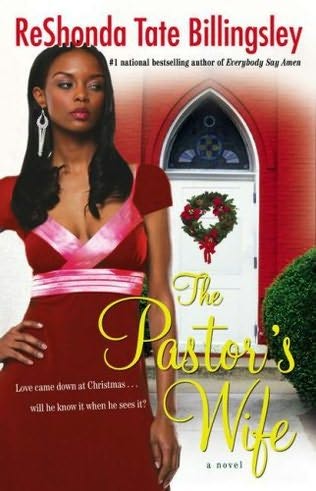
Author and Movie Producer, Reshonda Tate Billingsley Tops the October 2008 Essence Bestseller's List with The Pastor's Wife(Pocket.)
EBook Sales Soar
Audiobook sales decreased 6.9% in July, with sales totaling $11.9 million; sales for the year were down by 26.8%. However, E-book sales continued to rise in August, seeing an 82.9% increase for the month to $4.3 million and posting an increase of 52% for the year. Source:Publishing.org
WGA Writers Open Letter to Tyler Perry
This month Writers Guild television script like Tina Fey writers wrote an open letter to Tyler Perry asking him to rehire four WGA writers he fired from TP's "The House of Payne."
Some well known writers involved in the letter are:
Lee Aronsohn, Two & a Half Men, The Big Bang Theory Ed Bernero, Criminal Minds John Bowman, Frank TV, Martin, In Living Color Tina Fey, 30 Rock Hart Hanson, Bones Warren Hutcherson, Everybody Hates Chris, The Bernie Mac Show Michael Leeson, Bill Engvall Show, The Cosby Show BCarol Mendelsohn, CSI: Crime Scene Investigation, CSI: Miami, CSI: NY Marti Noxon, Mad Men, Private Practice Steve Peterman, Hannah Montana Clyde Phillips, Dexter Shawn Ryan, The Shield, The Unit Alison Taylor, Just Jordan Marc Warren, Cory in the House Michael Warren, Happy Days, Family Matters, Hanging with Mr. Cooper
To read the full letter and more writers involved click here.Photo courtesy of The Orlando Sentinel.
ESSENCE.COM, the premiere lifestyle, news and entertainment web site for African- American women, is seeking an Online Producer. In March Essence announced a multimedia partnership with Warner Brothers that includes a redesign and relaunch of its web property, which will serve as a platform for our rich content, and an outlet for exciting original short-form video, specifically for black women. Online management is seeking a skilled web producer to meet the needs of the Essence.com user. DM me on Twitter to learn more.
Victoria Christopher Murray and Michelle Andrea Bowen DC Table Talk
October 10, 2008 TOMS RIVER: The Ocean County Library hosted novelists Michele Andrea Bowen and Victoria Christopher Murray on Friday, when the writers present "Welcome to Our Table: African-American Christian Traditions" at 7 p.m. in the library's Mancini Hall at 101 Washington St. The authors will discuss the African-American Christian fiction genre and church traditions. The event will feature gospel music, praise dancing, traditional food and a book signing.Registration is required by calling the library at (732) 349-6200.
It is time to play a Wild Card!Every now and then, a book that I have chosen to read is going to pop up as a FIRST Wild Card Tour. Get dealt into the game! (Just click the button!) Wild Card Tours feature an author and his/her book's FIRST chapter!
You never know when I might play a wild card on you!
JERRY B. JENKINS'S writing has appeared in Time, Reader's Digest, and Christianity Today, Guideposts, and dozens of other periodicals. He is an award-winning novelist with more than 70 million books sold, including 20 New York Times bestsellers (seven that debuted number one). Author of Left Behind, he has been featured on the cover of Newsweek magazine.
Jerry owns both the Christian Writers Guild and Jenkins Entertainment - a filmmaking company in Los Angeles.
He serves as chairman of the board of Trustees for the Moody Bible Institute of Chicago, and he and his wife Dianna live in Colorado.
List Price: $24.99 Hardcover: 558 pages Publisher: Tyndale House Publishers (July 22, 2008) Language: English ISBN-10: 141430904X ISBN-13: 978-1414309040
AND NOW...THE FIRST CHAPTER:
Adamsville State Penitentiary Death Row
With the man’s first step, the others on the Row began a slow tapping on their cell doors.
The tiny procession reached the end of the pod, and the rest of the way through security and all the way to the death chamber was lined on either side with corrections officers shoulder to shoulder, feet spread, hands clasped behind their backs, heads lowered. As the condemned reached them, each raised his head, snapped to attention, arms at his sides, feet together.
What a tribute, he thought. Who would ever have predicted this for one who had, for so much of his life, been such a bad, bad man?
October, seventeen years earlier Touhy Trailer Park
Brady Wayne Darby clapped his little brother on the rear. “Petey, time to get up, bud. We got no water pressure, so . . .”
“Again?”
“There’s a trickle, so give yourself a sponge bath.”
“Ma already gone?”
“Yeah. Now come on. Don’t be late.”
At sixteen, Brady was twice Peter’s age and hated being the man of the house—or at least of the trailer. But if no one else was going to keep an eye on his little brother, he had to. It was bad enough Brady’s bus came twenty minutes before Peter’s and the kid had to be home alone. Brady poured the boy a bowl of cereal and called through the bathroom door, “No dressing like a hoodlum today, hear?”
“Why’s it all right for you and not for me?” “Whatever.”
“Straight home after school. I got practice, so I’ll see ya for dinner.”
“Ma gonna be here?”
“She doesn’t report to me. Just keep your distance till I get home.”
Brady rummaged for cigarettes, finally finding five usable butts in one of the ashtrays. He quickly smoked two down to their filters, tearing open the remaining three and dumping the tobacco in his shirt pocket. Desperately trying to quit so he could stay on the football team, Brady couldn’t be seen with the other smokers across the road from the school, so he had resorted to sniffing his pocket throughout the day. If he couldn’t cop a smoke from a friend after last class and find a secluded place to light up, he was so jittery at practice he could hardly stand still.
Brady grabbed his books and slung his black leather jacket over his shoulder as he left the trailer, finding the asphalt already steaming in the sun. Others from the trailer park waiting for the bus made him feel as if he were seeing his own reflection. Guys and girls dressed virtually the same, black from head to toe except for white shirts and blouses. Guys had their hair slicked back, sideburns grown retro, high-collared shirts tucked into skintight pants over pointy-toed shoes. Oversize wallets, most likely as empty as Brady’s, protruded from back pockets and were attached to belt loops by imitation silver or gold chains.
So they were decades behind the times, even for rebels. Brady—an obsessive movie watcher—was a James Dean fan and dressed how he wanted, and the rest copied him. One snob called them rebels without a clue.
Brady scowled and narrowed his eyes, nodding a greeting. The fat girl with the bad face, whom Brady had unceremoniously dumped more than a year ago after he had gotten to know her better than he should have in the backseat of a friend’s car, sneered as she cradled her gigantic purse to her chest. “Still trying to play jock?”
Brady looked away. “Leave it alone, Agatha.”
“More like a preppy,” one of the guys said, reaching to flick Brady’s schoolbooks.
“You definitely don’t want to start with me,” Brady said, glaring and calling him the foulest name he could think of. The kid quickly backed off.
Brady knew he looked strange carrying schoolbooks. But the coach kept track.
The trailer park was the last stop on the route, and the yellow barge soon drifted in, crammed with suburbia’s finest: jocks, preppies, and nerds—every last one younger than Brady. No other self-respecting kid with a driver’s license rode the bus.
In a life of endless days of open-fly humiliation, this boarding ritual was the most painful. Brady took it upon himself to lead the group. They could hide behind him and each other, avoiding the squints and stares and held noses as they slowly made their way down the aisle looking, usually in vain, for someone to slide over far enough to allow one cheek on the seat for the ride to school.
“Phew!”
“. . . brewery . . .”
“. . . smokehouse . . .”
“. . . B.O. . . .”
Brady neither looked nor waited. His daily goal was to find the most resolute rich kid and make him move. Today he stared down at the short-cropped blond hair of a boy who had been trying to hide a smile while pretending to study. Brady pressed his knee against him and growled, “Move in, frosh.”
“I’m a sophomore,” the kid huffed as he made room.
On the way home, Brady would ride the activities bus. There he would for sure be the only one of his type, but football earned him his place among the jocks, cheerleaders, thespians, and assorted club members. Wide-eyed at first, they seemed to have grudgingly accepted him, though they still clearly saw the trailer park as a novelty. One evening as he trudged from the bus, Brady had been sure everyone was watching. He turned quickly, only to be proven right, and felt face-slapped. At least the trailer park was the first stop at the end of the day. 11 a.m.
First Community Church Vidalia, Georgia
Reverend Thomas Carey knew he would not be getting the job when the head of the pastoral search committee—a youngish man with thick, dark hair—dismissed the others and asked Grace Carey if she wouldn’t mind waiting for her husband in the car.
“Oh, not at all,” she said, but Thomas interrupted.
“Anything you say to me, you can say to her.”
The man put a hand on Thomas’s shoulder and spoke softly. “Of course, you’re free to share anything you wish with your spouse, Reverend, but why don’t you decide after you hear me out?”
Grace assured Thomas it was all right and retreated from the sanctuary.
“You tell her everything?” the man said.
“Of course. She’s my—”
“She knows we saw you at your request, not ours, and that we didn’t feel you warranted a visit to hear you preach?”
Thomas Carey pressed his lips together. Then, “I appreciate your meeting with us today.”
The committee chairman pointed to a pew and leaned against another as Thomas sat. “I need to do you a favor and be frank with you, Reverend. I can tell you right now this is not going to go your way. In fact, we’re not going to bother with a vote.”
“That doesn’t sound fair.”
“Please,” Dark Hair said. “I know these people, and if I may be blunt, you rank last on the list of six we’ve already interviewed.”
“Shouldn’t you poll the others on their—?”
“I’m sorry, but you have a three-year Bible college diploma, no real degree, no seminary training. You’re, what, in your midforties?”
“I’m forty-six, yes.”
“Sir, I’ve got to tell you, I’m not surprised that your résumé consists of eight churches in twenty-two years—the largest fewer than 150 members. Have you ever asked yourself why?”
“Why what?”
“Why you’ve never been successful, never advanced, never landed a church like ours . . .”
“Surely you don’t equate success with numbers.”
“Reverend Carey, I’m just trying to help. You and your sweet wife come in here, I assume trying to put your best foot forward, yet you look and dress ten years older than you are, and your hair is styled like a 1940s matinee idol.”
Dark Hair extended his hand. “I want to sincerely thank you for your time today. Please pass along my best wishes to your wife. And be assured I meant no disrespect. If it’s of any help, I’m aware of several small churches looking for pastors.”
Thomas stood slowly and buttoned his sport jacket. “I appreciate your frankness; I really do. Any idea how I might qualify for a bigger work? I don’t want to leave the ministry, but our only child is in her second year of law school at Emory, and—”
“When there are many Christian colleges that would give a minister huge discounts?”
“I’m afraid she would be neither interested in nor qualified for a Christian school just now.”
“I see. Well, I’m sorry. But the fact is, you are what you are. None of your references called you a gifted preacher, despite assuring us you’re a wonderful man of God. If you cannot abide your current station, perhaps the secular marketplace is an option.”
5 p.m. Head Football Coach’s Office Forest View High School
Brady hadn’t even thoroughly dried after his shower. Now he sat in Coach Roberts’s cramped space with his stuff on his lap, waiting for the beefy man. Every player was listed on a poster on the wall, his place on the depth chart and his grade in every class there for all to see. Brady knew what was coming. He should have just skulked out to the bus and, by ignoring the coach’s summons, announced his quitting before being cut.
But he knew the drill. Never give up. Never say die. Keep your head up. Look eager, willing.
Finally Roberts barreled in, dropping heavily into a squeaky chair. “I gotta ask you, Darby: what’re you doing here?”
“You asked me to come see you—”
“I mean what’re you doing trying to play football? You’re a shop kid, ain’t ya? You didn’t come out as a frosh or a soph. I smell smoke all over you.”
“I quit, Coach! I know the rules.”
“We’re barely a month into the year, and you’re makin’ Ds in every class. You’re fourth-string quarterback, and entertaining as it is for everybody else to watch you racing all over the practice field on every play, we both know you’re never gonna see game time. Now, really, what’re you doing?”
“Just trying to learn, to make it.”
Brady couldn’t tell him he was looking for something, anything, to get him out of the trailer park and closer to the kids he had despised for so long. They seemed to have everything handed to them: clothes, cars, girls, college, futures. No, he wasn’t ready to dress differently; he took enough heat from his friends just for carrying books and playing football.
“Listen, your teachers, even the ones outside of industrial arts, tell me you’re not stupid. You’re a good reader, sometimes have something to say. But you don’t test well, rarely do your homework. What’s the deal?” Brady shrugged. “It’s just my ma and my brother and me.”
“Hey, we’ve all got problems, Darby.”
Do we? Really? “Like I said, I quit smoking, and I’m trying to get my grades up.”
“Look, I want to see you succeed, but frankly you’re a distraction here. I rarely cut anybody willing to practice and ride the bench—”
“Which I am.”
“Yeah, but this isn’t working, and I don’t want to waste any more of your time.”
“Don’t worry about wasting my—”
“Or mine. Or my coaches’. If you’re determined to get involved in some extracurricular stuff, there’s all kinds of other—”
“Like what?”
Coach Roberts looked at his watch. “Well, what do you like to do?”
“Watch movies.”
“Don’t we all? But is it a passion for you?”
“You have no idea.”
“You want to be an actor someday? study theater?”
Brady hesitated. “Never thought of that, but yeah, that would be too good to be true.”
“Now see, with that attitude, you’ll never get anywhere. If you want to try that, try it! Talk to Nabertowitz, the theater guy. See if there’s a club or a play or something.”
“There’s rumors about him.”
“Do yourself a favor and keep your mouth shut about that. Those artsy people can be a little flamboyant, but the guy’s got a wife and kids, so don’t be jumping to conclusions, and you’ll stay out of trouble.”
Brady shrugged. “I’d be as new there as I was here.”
“Oh, I expect you’d be a sight among that crowd, though there’s all kinds of behind-the-scenes stuff I’ll bet you could do. But I need to tell you, football is not your thing.”
If you missed the Faith and Fiction Lover's Retreat Recap Show on Blog Talk Radio, you can listen in its entirety here or download it to listen to later. Guests on the Show were: Tiffany Warren, Victoria Christopher Murray, Reshonda Tate Billingsley, Dwan Abrams, Rhonda McKnight, Mikasenoja, Ashea Goldson, Ty Moody, Linda Leigh Hargrove, Kendra Norman-Bellamy, Ella Curry and myself.